
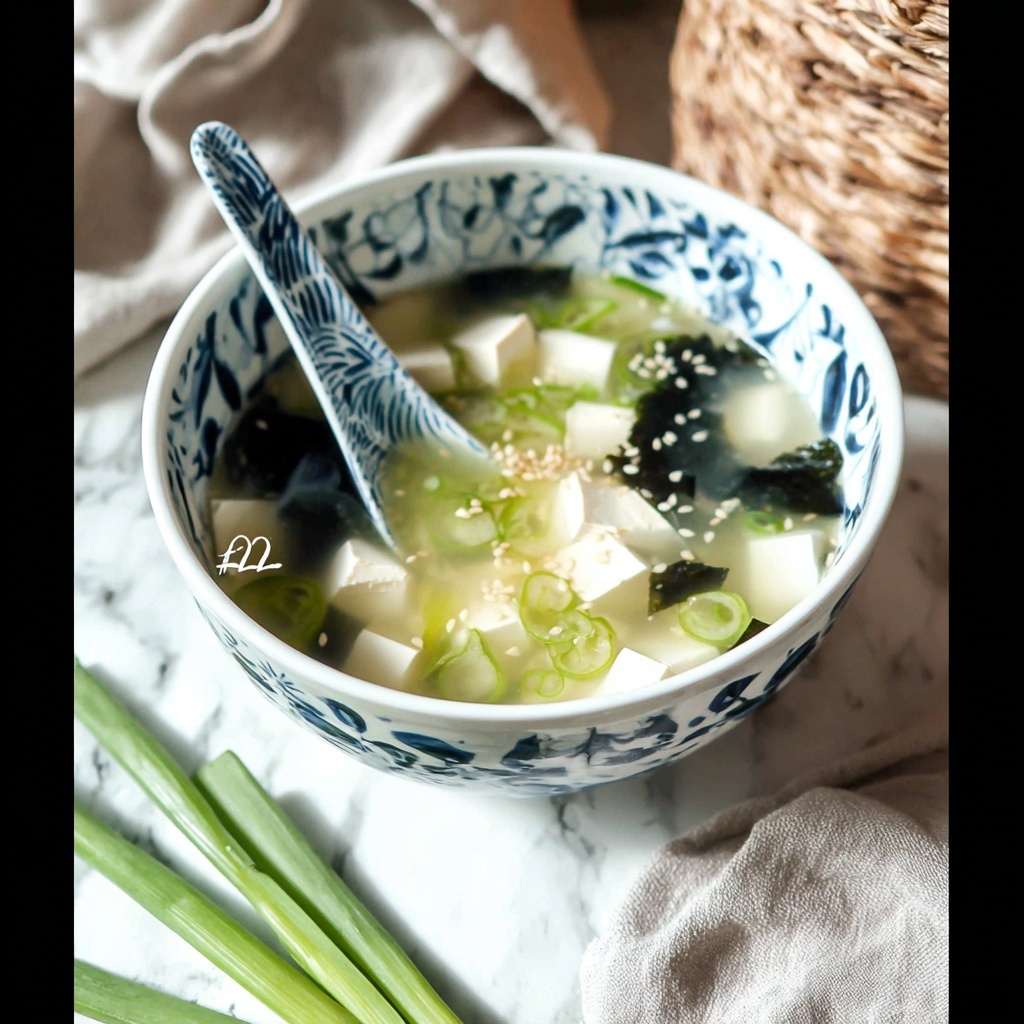
If you have ever craved a comforting, savory bowl of Japanese goodness, this Homemade Miso Soup with Tofu Recipe is exactly what you need. With its delicate balance of earthy miso, soft tofu cubes, and subtle seaweed notes, this soup is a warm hug in a bowl—easy to make, wholesome, and satisfying. Whether you’re looking for a quick starter or a light meal, this recipe brings the authentic flavors of Japanese home cooking right to your kitchen in under 10 minutes.
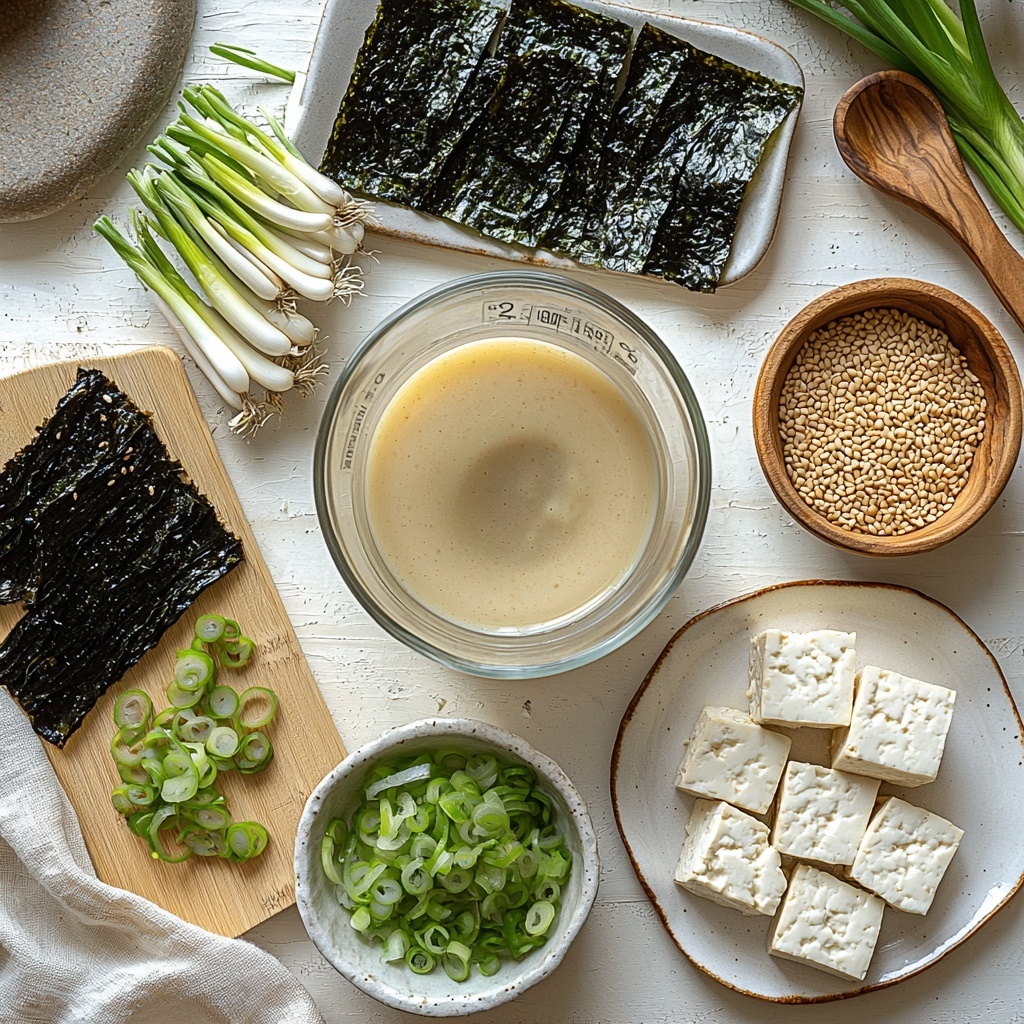
Ingredients You’ll Need
Though the ingredient list is simple, each element plays an essential role in creating that perfectly balanced, silky, and umami-packed soup that everyone loves. From the miso paste’s deep flavor to the tofu’s creamy texture and the touch of seaweed for that iconic taste, every ingredient counts.
- 4 cups boiling water: The base of the broth, which can also be substituted with vegetable broth or kombu dashi for extra depth.
- ¼ cup miso paste: The star ingredient, lending that unmistakable savory and slightly sweet flavor foundational to the soup.
- ¼ cup green onion, finely chopped: Adds a fresh, gentle bite and vibrant color contrast.
- 1 cup soft tofu, diced: Provides a silky, delicate texture that soaks up the broth beautifully.
- Dried Nori seaweed, thinly sliced (for garnish): Elevates the soup’s taste with a subtle salty tang and a touch of crispness.
- ½ tablespoon toasted white sesame seeds (for garnish): Adds a lovely nutty aroma and a slight crunch to finish off the dish.
How to Make Homemade Miso Soup with Tofu Recipe
Step 1: Prepare the Broth
Start by bringing 4 cups of water to a boil in a medium pot. If you want to deepen the flavor, try using vegetable broth or make a traditional kombu dashi by soaking a piece of dried kombu in water and simmering it gently for about five minutes—just be sure to remove the kombu before adding anything else. This step lays the flavorful foundation without overwhelming the delicate nature of the miso.
Step 2: Dissolve the Miso Paste
Lower the heat so the water is hot but not boiling, then whisk in your miso paste gently until fully dissolved. A neat trick is to scoop the miso in a ladle and stir it slowly into the hot water to avoid clumps and ensure a smooth, consistent broth. This patience guarantees every spoonful tastes rich and balanced.
Step 3: Add Tofu and Green Onions
Stir in the diced tofu and finely chopped green onions, letting the soup simmer gently over low heat for two to three minutes. This warms the tofu perfectly without breaking it apart or boiling off the delicate flavors of miso, keeping the soup silky and fresh.
Step 4: Garnish and Serve
Ladle your miso soup into bowls, then top with thin ribbons of dried nori seaweed and a sprinkle of toasted white sesame seeds. These finishing touches add texture, aroma, and that iconic burst of umami essence that makes this dish feel truly special.
How to Serve Homemade Miso Soup with Tofu Recipe
Garnishes
Beyond the classic nori and sesame seeds, feel free to experiment with fresh mizuna leaves, shichimi togarashi for a gentle hint of spice, or tiny cubes of wakame seaweed. These additions brighten and personalize your bowl while complementing the gentle soup base beautifully.
Side Dishes
This Homemade Miso Soup with Tofu Recipe shines alongside simple Japanese staples like steamed rice, pickled vegetables, or a crisp cucumber salad. It also pairs wonderfully with grilled fish or tempura, giving you a wholesome, well-rounded meal that’s both comforting and satisfying.
Creative Ways to Present
For a special touch, serve the soup in rustic ceramic bowls to enhance the cozy feeling or add a drizzle of chili oil for a pop of color and heat. You can also float thin slices of shiitake mushrooms or baby spinach leaves on top to add a seasonal twist while keeping the presentation elegant and inviting.
Make Ahead and Storage
Storing Leftovers
Miso soup is best enjoyed fresh, but if you have leftovers, store the soup and tofu separately in airtight containers in the refrigerator for up to two days. This prevents the tofu from becoming overly soft and keeps the flavors bright.
Freezing
Freezing miso soup is not generally recommended because the tofu can change texture and become grainy after thawing. If you must freeze it, separate the broth and tofu, freezing only the broth for up to one month, and add fresh tofu when reheating.
Reheating
When ready to enjoy leftovers, gently warm the broth on low heat and add freshly diced tofu and green onions. Avoid boiling the soup to preserve the delicate miso flavors and the tofu’s silky texture. This careful reheating keeps the soup tasting almost as fresh as when made.
FAQs
Can I use any type of miso paste for this recipe?
Absolutely! White miso is milder and sweeter, making it perfect if you prefer a gentle flavor. Red miso is stronger and saltier, great for a richer taste. Feel free to experiment or even blend the two for your ideal bowl.
Is it possible to make this soup vegan?
Yes, this recipe is naturally vegan as long as you use a kombu-based broth instead of fish-based dashi and choose plant-based toppings. The miso paste and tofu are plant foods, ensuring a delicious vegan-friendly meal.
Can I add other vegetables to this miso soup?
Definitely! You can add baby spinach, mushrooms, carrots, or daikon radish slices for extra nutrition and texture. Just be mindful of cooking times to keep everything tender yet crisp.
How can I avoid the miso losing its flavor when heating?
The key is never to boil the soup after adding miso paste. Heat your broth first, then dissolve the miso gently off the heat or on very low heat to preserve the delicate flavors and beneficial enzymes in miso.
What’s the best kind of tofu for this soup?
Soft or silken tofu works best because it melts in your mouth and absorbs the savory broth wonderfully. Firmer tofu can be used but will change the texture experience slightly.
Final Thoughts
I hope you’re as excited as I am to try this delightful Homemade Miso Soup with Tofu Recipe. It is incredibly simple yet packed with so much flavor and warmth, perfect for any day you need a cozy, nourishing pick-me-up. Give it a go and watch it become a regular comfort in your cooking repertoire!
Print
Homemade Miso Soup with Tofu Recipe
- Prep Time: 5 minutes
- Cook Time: 5 minutes
- Total Time: 10 minutes
- Yield: 4 servings
- Category: Soup
- Method: Stovetop
- Cuisine: Japanese
- Diet: Vegetarian
Description
A quick and comforting homemade miso soup featuring soft tofu, green onions, and traditional Japanese ingredients like miso paste and dried nori. This simple recipe offers a soothing umami broth perfect for any meal.
Ingredients
Soup Base
- 4 cups boiling water (or vegetable broth/kombu dashi for richer flavor)
- ¼ cup miso paste (or 4-inch piece of kombu for traditional broth)
Soup Additions
- 1 cup soft tofu, diced
- ¼ cup green onion, finely chopped
Garnish
- Dried Nori seaweed, thinly sliced
- ½ tablespoon toasted white sesame seeds
Instructions
- Prepare the broth: In a medium pot, add 4 cups of boiling water. For a richer broth, substitute water with vegetable broth or prepare kombu dashi by simmering a 4-inch piece of kombu in water over medium-low heat for about 5 minutes, then remove the kombu.
- Dissolve the miso paste: Add ¼ cup miso paste to the hot water or broth. Use a small whisk or place miso in a ladle and stir gently until the paste is fully dissolved and the broth is smooth without clumps.
- Add tofu and green onions: Stir in 1 cup of diced soft tofu and ¼ cup finely chopped green onions. Simmer the soup over low heat for 2 to 3 minutes, making sure it heats through but does not boil to preserve the delicate miso flavors.
- Serve and garnish: Ladle the soup into bowls and garnish with thinly sliced dried nori seaweed and a sprinkle of toasted white sesame seeds. Serve warm immediately for the best taste.
Notes
- Do not boil the soup after adding miso paste as it can alter the flavor and reduce beneficial nutrients.
- You can substitute soft tofu with silken tofu for a smoother texture.
- Kombu dashi is optional but enhances traditional umami flavor if you want an authentic Japanese taste.
- Use low-sodium miso paste to reduce sodium content if desired.